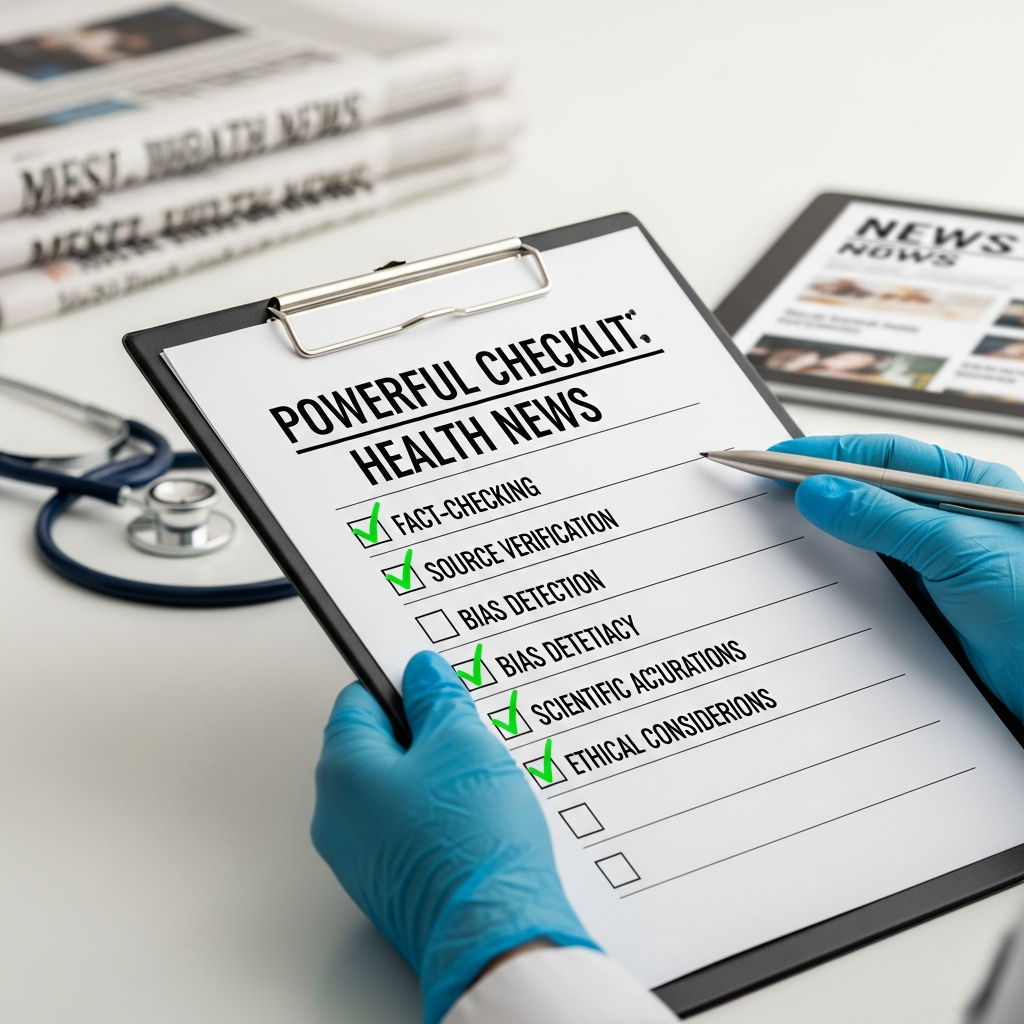
The Powerful Checklist for Health News: How to Navigate Information in a Digital Age
In an era where information travels at the speed of a click, health news has become more accessible than ever. However, with this accessibility comes a significant challenge: the rise of misinformation, sensationalism, and “clickbait” science. Whether it is a “miracle cure” for a chronic condition or a “shocking” new study about a common food, the headlines we see on social media can directly impact our physical and mental well-being.
Health literacy is no longer just about understanding what your doctor tells you; it is about becoming a critical consumer of media. To protect yourself from misleading claims, you need a systematic approach to evaluating medical news. This powerful checklist for health news will provide you with the tools necessary to separate scientific fact from viral fiction.
1. Identify the Original Source
The first step in any checklist for health news is to find the source. Is the information coming from a reputable news organization, a personal blog, or a scientific journal? While mainstream news outlets often report on health, they frequently simplify complex data for a general audience, which can lead to the loss of crucial context.
- Primary Sources: Look for links to peer-reviewed journals such as The Lancet, The New England Journal of Medicine (NEJM), or JAMA.
- Secondary Sources: If a news site reports on a study without naming the journal or the lead researchers, proceed with caution.
- The “About Us” Page: If you are on a website you don’t recognize, check their credentials. Are they a legitimate medical institution (like the Mayo Clinic) or a site designed to sell supplements?
2. Check for Peer Review
In the world of science, the gold standard is the peer-review process. This means that before a study is published, other experts in the same field have scrutinized the methodology, data, and conclusions. Health news based on “pre-prints” (studies released before peer review) or anecdotal evidence should be viewed as preliminary and potentially unreliable.
Peer review acts as a filter that catches errors and ensures that the conclusions drawn by the researchers are actually supported by the data provided. If a headline claims a breakthrough but the study hasn’t been peer-reviewed, it is best to wait for more evidence.
3. Analyze the Study Design and Sample Size
Not all studies are created equal. The weight you give to a piece of health news should depend on how the research was conducted. A powerful checklist for health news must include an evaluation of the “N” number—the sample size.
- Animal vs. Human Studies: A study that shows a drug cures cancer in mice is a great starting point, but it does not mean the drug will work in humans. Most animal trials do not successfully translate to human medicine.
- Sample Size: A study involving 20 people is much less reliable than a study involving 20,000. Small sample sizes are prone to “flukes” and statistical noise.
- Randomized Controlled Trials (RCTs): This is the highest level of evidence. It involves two groups (one getting the treatment, one getting a placebo) to see if the treatment actually works.
4. Correlation Does Not Equal Causation
This is perhaps the most common trap in health journalism. Just because two things happen at the same time does not mean one caused the other. For example, a study might find that people who drink green tea live longer. This is a correlation. However, it might not be the tea itself—perhaps green tea drinkers are also more likely to exercise and less likely to smoke. That is the causation.
When reading health news, ask yourself: Did the researchers prove that “A” caused “B,” or did they simply notice that “A” and “B” often show up together? Reputable news will acknowledge these “confounding variables” rather than making definitive claims.
5. Look for Conflict of Interest and Funding
To truly understand health news, you must follow the money. Scientific research requires funding, and sometimes that funding comes from organizations that have a vested interest in the outcome. While a study funded by a private company isn’t automatically false, it does require extra scrutiny.
- Industry Funding: If a study claiming that sugar is “not that bad for you” was funded by the soft drink industry, there is a clear conflict of interest.
- Disclosure Statements: Reputable journals require authors to disclose any financial ties to companies related to their research. Always look for these disclosures at the end of a study.
6. Beware of Sensationalism and Absolute Language
Science is rarely “shocking,” “miraculous,” or “definitive.” Most scientific progress happens in small, incremental steps. If a health news headline uses hyperbolic language, it is a major red flag.
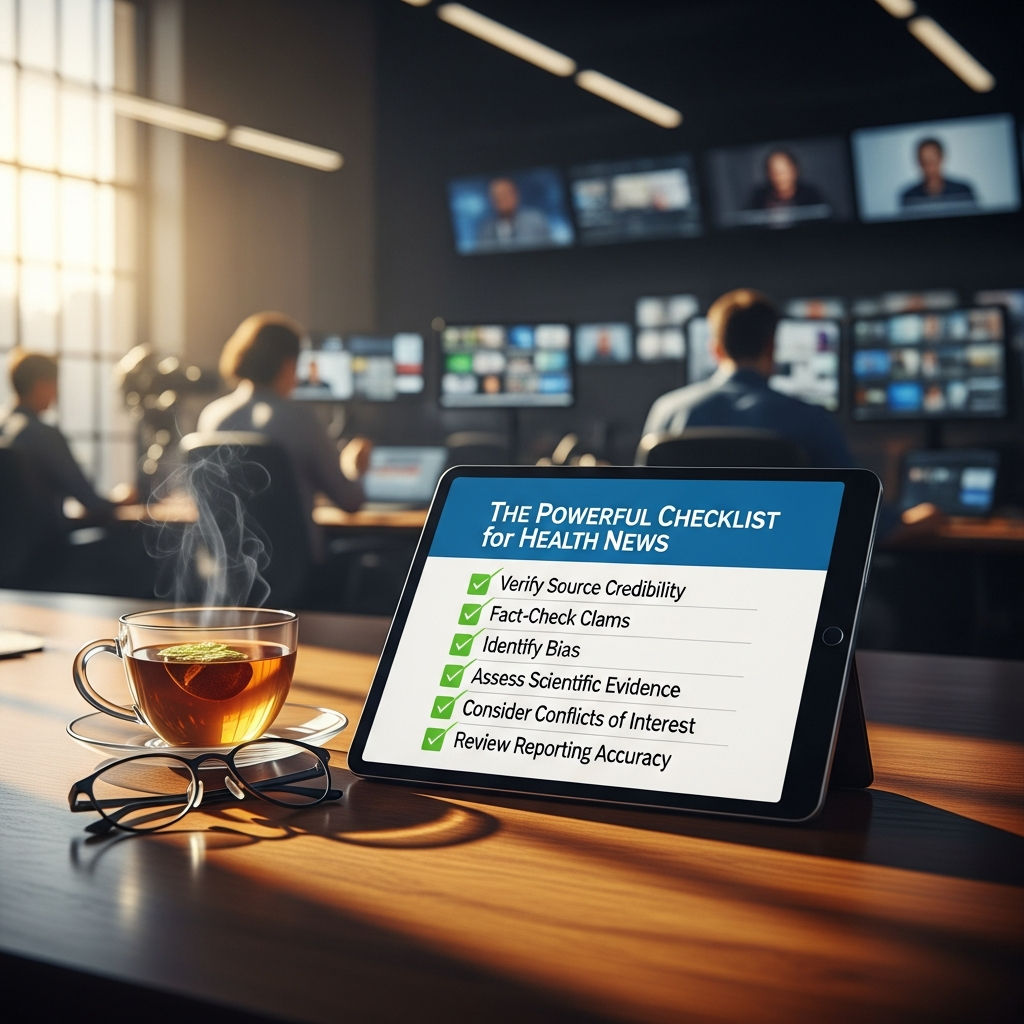
Be wary of phrases like:
- “Everything you thought you knew is wrong.”
- “Doctors are hidden this one secret.”
- “The miracle cure for [Insert Disease].”
- “Immediate results guaranteed.”
Real health news usually includes caveats, such as “more research is needed” or “the findings suggest a link.” It acknowledges the limitations of the study rather than promising a revolution in medicine.
7. Compare the Findings with Existing Research
A single study is rarely enough to change medical guidelines. Science is a consensus-building process. If a new study contradicts decades of established medical knowledge, it requires an extraordinary amount of evidence to be taken seriously.
When you encounter a “game-changing” health story, look for what other experts in the field are saying. Do they agree with the findings? Is this an outlier study, or does it fit into the broader body of work on the subject? Systematic reviews and meta-analyses (which look at many studies at once) are much more reliable than a single report.
8. Consult the “Big Three” Sources
If you are unsure about a piece of health news, cross-reference it with established health organizations. These institutions have teams of experts who vet information before presenting it to the public. Reliable sources include:
- The World Health Organization (WHO): Excellent for global health trends and infectious diseases.
- The Centers for Disease Control and Prevention (CDC): The gold standard for health alerts and preventative medicine in the U.S.
- The National Institutes of Health (NIH): A massive repository of clinical trials and evidence-based medical research.
Conclusion: Becoming a Savvy Health Consumer
In the digital age, your attention is a commodity. Clickbait headlines are designed to trigger an emotional response—usually fear or hope—to get you to click and share. By using this powerful checklist for health news, you can bypass the emotional traps and focus on the evidence.
The next time you see a viral health story, take a breath. Check the source, look for peer review, evaluate the sample size, and look for funding biases. Your health is too important to be guided by a headline that was written just to generate ad revenue. Stay informed, stay skeptical, and always consult with a qualified healthcare professional before making significant changes to your diet, lifestyle, or medical regimen.
Health literacy is a superpower. By sharpening your critical thinking skills, you ensure that the decisions you make for your body are based on the best possible science, not the most popular social media post.